Parchment paper is a well-known kitchen tool, helping to keep cookies from sticking to their trays, and cutting down on unnecessary washing up.
Yet it mostly gets used only once before ending up in the trash.
So, when it comes to whether this too should be put on the list of eco-enemies, the first question is: What is parchment paper and is it recyclable?
Short answer: No it isn’t. But it doesn’t mean you have to give up on parchment paper yet. As you’ll see in this article, not all parchment papers are made equal.
What is parchment paper?

Knowing what is parchment paper (aka baking paper) is important to understand whether it is eco-friendly or not. How parchment paper is made may be a surprise to most people, particularly as it involves a bath of acid.
Unsized paper is the starting point of this handy kitchen item.
Also known as ‘waterleaf’, this paper is made from wood or plant pulp without the other fillers that help make the paper less absorbent, and therefore prevent bleeding.
The unsized paper is run through a bath of sulfuric acid or zinc chloride. The process melts the surface fibers of the paper, creating a gelatinous layer. Having come out of the acid, the paper is cleaned and dried. It is now much less absorbent, stronger and heat-resistant.
Today, an additional coating of silicone is often added to increase the non-stick properties of this paper. Silicone is a type of plastic often used in cookware because it is heat-resistant and food safe.
Is parchment paper recyclable?
Unfortunately, parchment paper isn’t suitable for recycling.
One of the main reasons is that paper recycling cannot cope with the addition of grease, as this stains the paper fibers and cannot be removed during the recycling process.
Therefore, any paper that has been used with food, usually cannot be recycled as it may be contaminated.
Beyond this, any parchment paper that has the additional coating of silicone cannot be recycled.
It is very difficult to separate the silicone from the parchment paper during the recycling process. While silicone can technically be recycled, few places offer this service.
Parchment paper and the environment
Well, it depends…
Yes, parchment paper itself is biodegradable, the main ingredient being wood pulp. However, it actually won’t be biodegradable in most cases.
First issue: The silicone coating will not biodegrade, as this is a type of plastic.
Second issue: If your parchment paper is bleached, it contains chlorine and harmful chemicals that shouldn’t be released into the soil.
In conclusion, the only parchment paper that will biodegrade is the unbleached paper, without silicone coating. When in doubt, check the manufacturer’s information on the packaging.
Note that some parchment paper also includes foil, which is biodegradable.
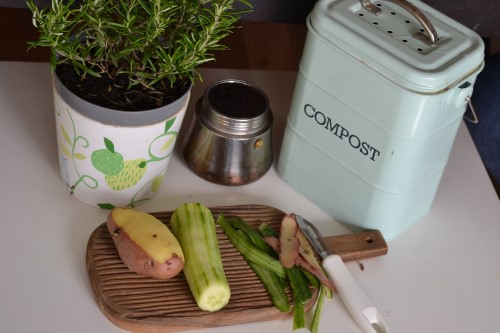
When it comes to whether you can compost parchment paper, the answer is largely no.
Due to the silicone coating, most parchment paper is not compostable. Parchment paper without a silicone coating would be compostable, however, if food remnants remain on the paper it may be unwise to home compost it, as you may attract pests.
Most parchment paper is designed to be single use; however, you can reuse it if it isn’t too soiled.
Then, is parchment paper eco-friendly?
It is difficult for single use items to be considered eco-friendly, as their footprint is comparatively large for how often they will be used.
The best option for parchment paper, when it comes to the environment, is to opt for parchment paper made of recycled paper that is free of silicone coating and chlorine.
- Recycled parchment paper reduces the number of trees needing to be cut down to create new parchment paper.
- Unbleached parchment paper is free of nasty and harmful chemicals
- Reusing parchment paper can also help reduce this footprint a little.
There are now many eco-friendly parchment papers being sold, which frequently have no silicone coating, no chlorine and are made with recycled paper.
How to dispose of parchment paper in the US?
Recycling?
As we have seen, when it comes to whether you can recycle parchment paper, the answer is a resounding no.
Composting?
Depending on the type of paper you buy there may be the option to compost it, however, due to its use in cooking it is likely to be unsuitable for this.
Letting it biodegrade?
Yes, but only if it’s free of silicone and unbleached.
In most cases, here is what to do:
If you have local food recycling programs, any solid waste on the parchment paper can be removed into this trash can. The parchment paper itself, however, will have to go out on collection day with the rest of the trash that cannot be saved.
In conclusion
While you may think that parchment paper should be as easy to recycle as other types of paper, its use in cooking and the silicone coating often used to make it non-stick, mean it cannot be added to the paper recycling.
The good news is that you can choose more eco-options by going for unbleached, silicone-free alternatives. One step further towards reducing your waste can be to not use parchment paper at all and simply grease your paper and add a little elbow grease to your washing up.