Finding the most energy efficient washing machine in the UK could save money every time you wash your clothes. But with so many washing machine brands tempting you with new cycles and programs that supposedly wash your clothes more efficiently, how do you know who to trust?
Furthermore, did you know that your washing machine could account for 10% of your entire household’s energy use? Many homes use their washing machine up to 270 times a year!
So, let’s save those pennies (and maybe a few pounds).
Here is beeco’s list of the 5 most efficient models available in the UK, plus a buying guide and FAQ section below.
🔑 Key Takeaways
- The best energy efficient washing machine reduces energy, water, and detergent use
- Nearly all washing machines have a cold wash or eco setting that runs at a lower temperature
- Samsung, Bosch, and Haier produce some of the most efficient appliances on the market
- Check the EU energy label for an overall score, and read the Product Data Sheet for more info
- Cleaning your washing machine is easy and keeps it running efficiently, so check the manual and learn how to do this
Our selection of most energy efficient washing machines in the UK, 2022
We’ve scoured energy efficient washing machine reviews and compared the stats for the most popular machines in the UK! You can also compare key details for average energy and water use per cycle, for an idea of how much the appliance will cost to run.
| 🏆 – Best A Rated Energy Efficient Washing Machine (11kg) | Jump to review |
| Best Energy Efficient Integrated Washing Machine (9kg) | Jump to review |
| Best Cheap Energy Efficient Washing Machine (9kg) | Jump to review |
| Best Washing Machine on a Budget (Lower Bills!) (9kg) | Jump to review |
| Best Washing Machine for 10kg Loads | Jump to review |
Best A Rated Energy Efficient Washing Machine
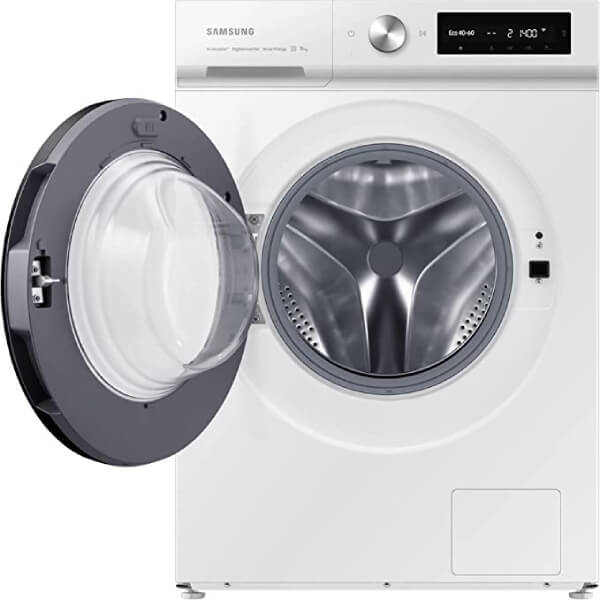
| Brand | Samsung |
| Energy Rating | A |
| Energy Usage | 0.53 kWh |
| Water Usage | 54 litres |
| Capacity | 11 kg |
| Programmes | 14 |
| Warranty | 5 years |
Our top rated eco washing machine is the Samsung Series 5+ SpaceMax. Like all the washers on our list, it’s A-rated and doesn’t come with a tumble dryer – air drying clothes is far better for the environment anyway.
This model has an 11kg drum capacity, which is the largest on our list – it can handle laundry for a 4-5 person household (or 2 parents + 2 messy kids!) and is barely more water and energy hungry than the smaller models.
The real “eco” feature on this model is the Fuzzy Logic sensor system, which weighs each load and calculates the perfect amount of water and energy needed to clean efficiently.
Best Energy Efficient Integrated Washing Machine
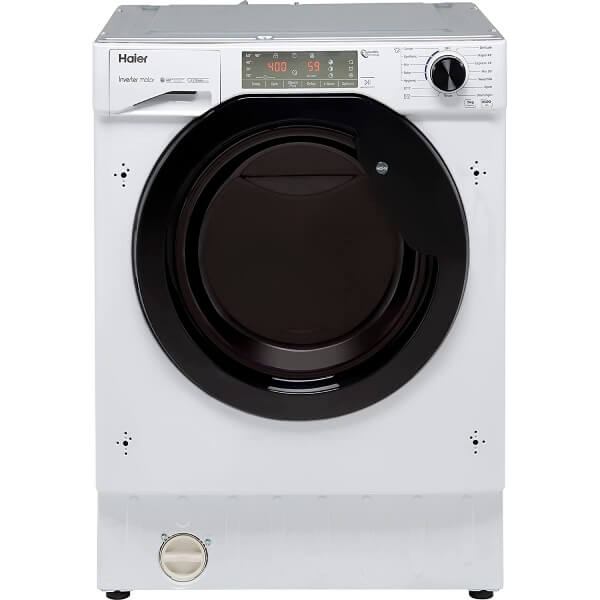
| Brand | Haier |
| Energy Rating | A |
| Energy Usage | 0.194 kWh |
| Water Usage | 46 litres |
| Capacity | 9 kg |
| Programmes | 15 |
| Warranty | 24 months |
This is an integrated, A-rated washing machine by Haier! The dimensions are standard – 82cm x 60cm x 53cm – and it fits neatly under a countertop.
Although this washing machine isn’t marketed as “eco”, it has a low average water and energy usage anyway. You can also use 15 different programmes (including an eco programme) to limit hot water and get your cottons cleaned perfectly.
We like the simplicity of this washing machine and the water usage is particularly low. Great for saving water!
Best Cheap Energy Efficient Washing Machine
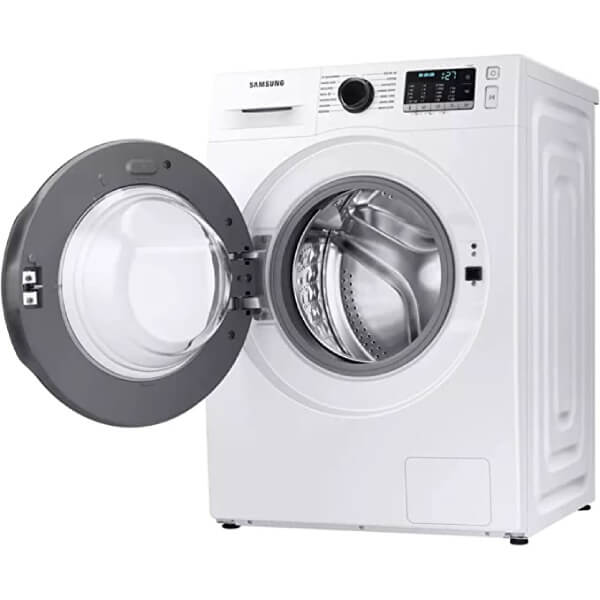
| Brand | Samsung |
| Energy Rating | A |
| Energy Usage | 0.494 kWh |
| Water Usage | 50 litres |
| Capacity | 9 kg |
| Programmes | 14 |
| Warranty | 5 years |
The cheapest A-rated washing machine is comfortably under £500. It’s ideal fif you don’t want to spend a fortune upfront but still want an eco-friendly appliance. We also like that it’s from a reputable brand.
If you don’t mind spending more upfront but want the cheapest bills possible in the long run, check out the washing machine below.
The energy rating for this Samsung Series 5 ecobubble™ is A and the water consumption isn’t bad either!
You can often find cheaper deals on washing machines if you look for older series numbers. You still get the 5-year warranty too.
Best Washing Machine on a Budget (Lower Bills!)
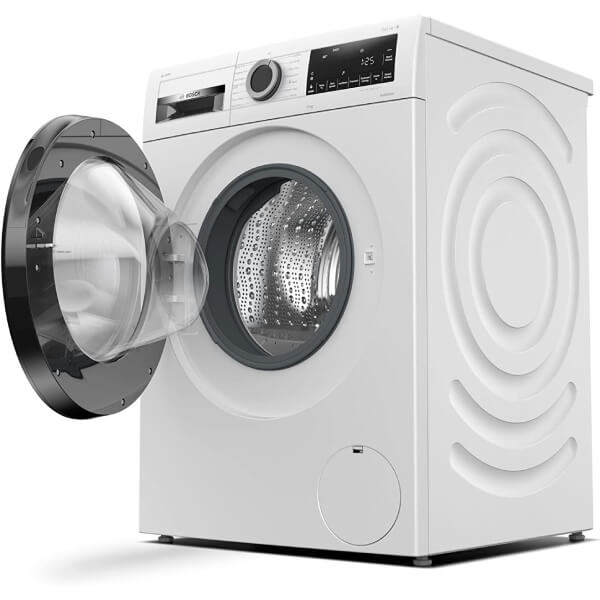
| Brand | Bosch |
| Energy Rating | A |
| Energy Usage | 0.464 kWh |
| Water Usage | 48 litres |
| Capacity | 9 kg |
| Programmes | 14 |
| Warranty | 24 months |
In the US, Bosch have their large appliances rated highly with Energy Star. In the UK, their energy efficiency is noted by our EU rating system too. This model, the Bosch Serie 6 9kg washing machine, is rated A in the new system and has the lowest average kWh per cycle.
We liked the ecoSilence Drive that greatly reduces the noise, along with all the programmes and features you expect from an energy efficient washing machine.
One feature that stood out is the i-DOS system. It stores your washing detergent inside the machine and automatically dispenses the right amount for the clothes you place in the drum. If you’re sticking with liquid detergent rather than an eco-friendly alternative detergent, it’s great!
Best Washing Machine for 10kg Loads

| Brand | Haier |
| Energy Rating | A |
| Energy Usage | 0.514 kWh |
| Water Usage | 48 litres |
| Capacity | 10 kg |
| Programmes | 16 |
| Warranty | 2 years (10 years for the motor) |
The higher the capacity, the higher the energy use. Even when a washing machine has an A rating on the EU energy label, like this 10kg Haier model, the energy consumption per cycle will be higher compared to an 8kg or 9kg model.
Nonetheless, this appliance is surprisingly efficient! It has a comparable water usage and a marginally higher energy usage compared to the 9kg Haier on our list.
Giving your clothes more room to move around in the machine helps clean them more effectively! We would recommend this washing machine if you prefer to do a few large loads per week, rather than smaller ones.
Guide to Finding an Energy Efficient Washing Machine
In the UK, we have a very straightforward rating system for energy efficiency. This means that finding a new machine that’s energy efficient is simple!
Look for the grade, which should be A to G, to gauge how efficient it is. If you see a rating like A+ on a washing machine, that means it’s using the old rating system. An A+ on the old system may only be a D or even an E on the new one. So watch out for that!
You’ll quickly notice that there are quite a few A-rated washing machines on the market. Most of these are pricey, so you may be tempted to look at B and C rated machines too. Of course, the upfront price is an important factor, but you also want to look at the running costs.
The three main running costs for your washing machine are:
- Energy (electricity) to run the washing machine.
- Water to wash your clothes.
- Detergent for soft, clean laundry.
You also need to think about:
- Maintenance and cleaning – an unclean drum (black mould tends to form in the rubber seal) and worn motor will mean more water and energy is needed to get the same results.
- Warranty – some warranty schemes last longer than others. If your washing machine breaks, replacing parts or the entirety of the appliance could be costly.
This is why we looked at customer ratings as well as energy ratings when compiling our list. You definitely want to make sure your washing machine is well made and has a decent warranty period.
To get an idea of running costs, look closely at the Product Data Sheet. If you can’t find it attached to the product on Amazon, you can always find it at the top of the page on AO!
Making Sense of Product Data Sheets
On your washing machine, you may have the sticker label, which is brightly coloured and gives you annual figures, or you may have the black and white Product Data Sheet attached separately.
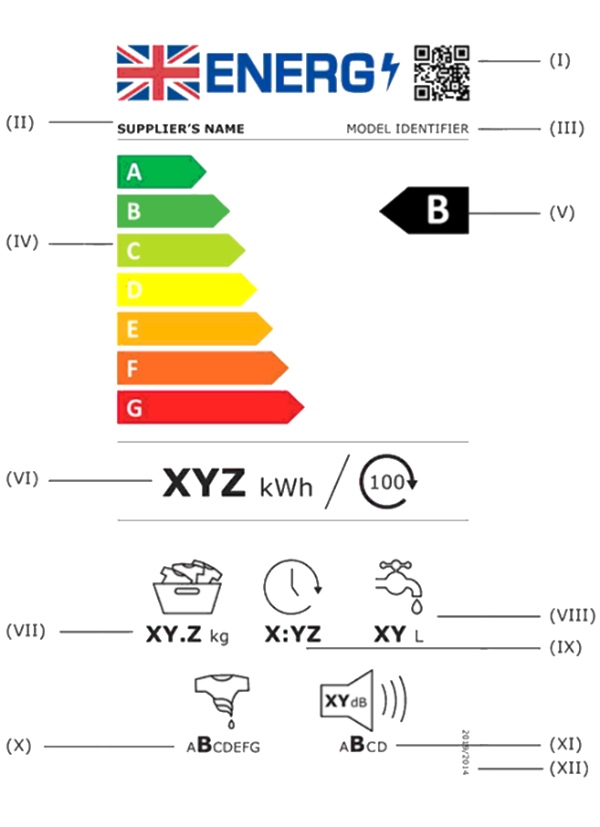
I. QR code for the digital file
II. Manufacturer’s name (e.g. Bosch)
III. Model number
IV. Grade scale
V. Grade number for the appliance
VI. The average kWh energy used for 100 wash cycles
VII. Capacity
VIII. Average cycle length
IX. Litres of water used per 100 wash cycles
X. Grade for rinsing
XI. Grade for volume
You can divide the energy and water figures by 100 to get your average cost per cycle.
Alternatively, the Product Data Sheet shows the average cost per cycle for you, so there’s less maths involved. It also gives you more in-depth data about rinse and spin efficiency, remaining moisture content, airborne acoustical noise emissions, and any warranties or guarantees provided by the manufacturer.
Important Note: both the sticker label and Product Data Sheet provide information based on the eco or 40-60 programme of the appliance. If you use a different programme, e.g. wool and delicates, it’s going to be more water and energy!
What Makes a Washing Machine Energy Efficient
The eco setting on a washing machine will usually decrease the water used, the water temperature, and the spin cycle to clean your clothes with minimal energy used.
The most energy efficient washing machines will also have unique tech features that have been designed to save energy, water, and often detergent too.
For example:
- Bosch use an i-DOS system to dispense only as much detergent as needed,
- Samsung ecobubble models soak clothes in bubble foam to loosen stains, so a shorter wash is needed overall,
- You can also find the Fuzzy Logic sensor system on some Samsung models, which weighs your clothes in the drum to calculate how much water is needed – reducing waste,
- Haier washing machines are fitted with a beltless Direct Motion Motor which reduces vibrations, so less energy is needed to spin the drum. It also makes their washing machines quiet!
We are happy to see some great innovation among these leading washing machine brands.
FAQs
Any washing machine that has been graded ‘A’ under the new EU energy label is one of the most efficient on the market for washing clothes. Typically, a 9kg model with an eco or cold wash setting will offer the best energy efficient programme.
Energy efficient washing machines use less energy and water than standard machines. They achieve this by using efficient motors as well as new technology. These washing machines may utilise:
– Sensors to detect precise clothes weight, thus releasing the smallest amount of water needed
– Special programmes and cycles to remove tough stains at lower temperatures
– Automatic programmes that adjust to the clothes you are washing
– Detergent release systems to only use as much as is necessary
Although the wash cycle technology varies greatly from one brand to another, you can quickly compare how they’ll impact your water and energy bill by reading the Product Data Sheet (or using our list of appliances above).
Energy Star washing machines use 33% less water than standard models, which equates to 14 gallons (63 litres) per load. However, we have found A-rated washers in the UK that use 11 gallons (50 litres) or less! Besides water, you also need to calculate energy use and detergent to get an overall cost for doing your laundry.
In the UK, energy efficient (and downright inefficient) washing machines are not tax deductible – this applies to both landlords and the self-employed. The only exception for the self-employed would be if the washing machine is solely used for work purposes (e.g., washing clothes at the office). You may also be able to calculate how many programmes or cycles used are tax deductible if you use it to launder a uniform or work outfit separately.
Modern washing machines are much more efficient than older models, so if you have a very old appliance it is definitely worth upgrading to an energy efficient washing machine. However, the difference in energy used for each washing programme between modern machines (e.g. between the Samsung and Bosch models in our list), is very slim.
If you already have a machine that’s only a few years old, the money saved from a more efficient model might not cover the cost of replacing the appliance – compare the kWh per cycle to find out how much energy you’ll actually save.
Cleaning your washing machine keeps it smelling fresh and working efficiently. Here’s what you should do:
– Check the manual for cleaning instructions and warnings,
– Buy the recommended cleaner, make a homemade solution (e.g., vinegar), or try our eco-friendly cleaning products,
– Add your cleaning product directly to the drum, or through the detergent drawer, and run the appliance on the hottest cycle – or the cleaning cycle, if it has one.
If you need to do a deeper clean, get into the drum and all those folds around the seal with a little baking powder and a toothbrush!
Extra tip: most washing machine detergent drawers are removable, for easier cleaning. Check the manual for instructions.