Glass kettles, although cool and more eco-friendly than plastic ones, do have some very specific downfalls. Every stain and speck of limescale is on display! So, that’s why we’ve created a quick guide on how to clean a glass kettle.
And don’t worry, we’ve got some great natural remedies and eco-friendly cleaning formulas you can make from ordinary cupboard supplies. No harsh chemicals needed.
We know you’re desperate for a cuppa, so let’s dive right in!
As we’ve just said, glass kettles are great eco-friendly alternatives to plastic kettles. But if, after reading this article, you think the cleaning is too challenging, don’t worry because there are other plastic free kettles and energy efficient kettles you can get!
Why your glass kettle gets so dirty!
Water straight from the tap is clean, right? And boiling water is a good way to sterilise it further, right?
So how on earth are our kettles getting dirty?!

It all comes down to hard water.
By hard water, we mean water that has high mineral content. You can find test paper strips to dip in your water to check if it’s hard water, but you can usually find this info online.
If you can see those white rocky deposits around your taps – also known as limescale – then you’re living in a hard water area.
Hard water stains and limescale build-up causes a number of problems. It clogs up your shower and alters the water pressure, it looks unsightly around the taps in your bathroom and can damage your plumbing system in general.
When it comes to your electric tea kettle, the limescale does damage here too. As the limescale builds up around the heating element, it can damage the interior of your kettle, prevent it from reaching boiling point, and it can even end up in your cup of tea.
While hard water isn’t detrimental to your health, it’s pretty gross finding limescale floating in your PG Tips.
Note: all kettles are susceptible to limescale build-up, not just glass ones. We just tend to notice the dirt quicker in glass kettles as they’re transparent.
Three natural ways to clean a glass kettle
Cleaning your kettle regularly is the best way to remove limescale and prevent it from building up. This will make your kettle more efficient (saving energy) and help prolong its life.
Talking about energy efficiency… we put together a dedicated guide on what to look for when shopping for an energy efficient kettle.
Below you can find the best three methods to clean your glass kettle without any harsh chemicals.
Warning: don’t try using a normal household descaler in your glass kettle! Even though we love that there are eco-friendly and refillable descaler formulas, this isn’t suitable for your kettle.
Save it for the bathroom taps.
It’s better to use a natural, homemade descaler solution with ingredients you’d happily consume in your everyday recipes anyway!
1 – The white vinegar method

With this method, you use the acidic nature of vinegar to dislodge and dissolve the limescale in your kettle. White vinegar is the best type to use, as it’s cheap, but you can use apple cider vinegar instead. The apple cider vinegar will give your kettle a nicer smell afterwards!
- Add ¼ cup of vinegar to a jug and top up with water until it holds enough to halfway fill your kettle.
- Mix the formula well, then pour this into your kettle and turn it on.
- Once the kettle has come to a boil and switched off, unplug it and leave it alone for 20 minutes.
- Gently scrub the inside of the kettle with a soft brush, if the limescale hasn’t lifted off by itself.
- Rinse thoroughly 2 or 3 times until the kettle is squeaky clean!
Extra tips: adjust the amount of vinegar from ¼ cup to ½ cup (or more) depending on the size of your kettle. Add more or less water, so the formula will cover all parts of the kettle that are covered in limescale.
2 – The baking soda method
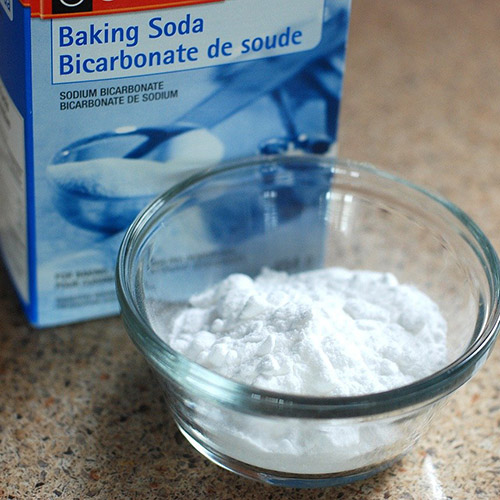
When it’s used for cleaning, this white powdery substance is most commonly known as baking soda. But in the UK, we more commonly refer to it as bicarbonate of soda when we are baking. This is pure sodium bicarbonate.
Don’t use British baking powder by mistake – this contains bicarbonate of soda but it also contains other ingredients, like cornflour and additional weak acids. Baking powder won’t be as effective as pure bicarbonate of soda.
- Use 1 tablespoon of bicarb for every litre of water (or half a tablespoon for a 500ml kettle).
- Mix the soda and water thoroughly, then pour into your kettle and boil.
- Unplug, leave it for 15 minutes, then immediately rinse.
Extra tip: if your limescale is super tough, mix a teaspoon of bicarb with a few drops of water to create a paste, then gently scrub this onto the limescale until it loosens.
3 – The lemon juice method
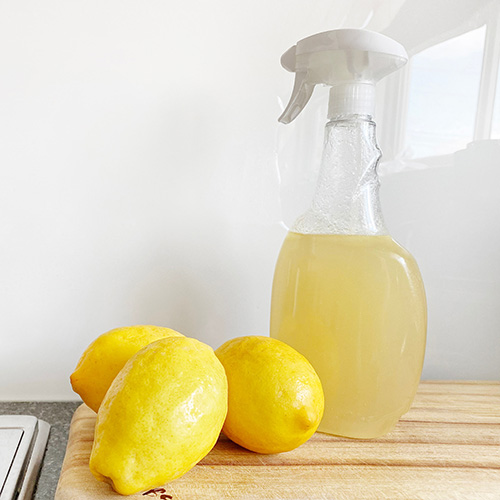
Lemon juice is a really nice way to clean a kettle as it creates a delicious lemony fragrance afterwards, which goes quite nicely with tea!
Most descaling solutions use citric acid, which is the same acid in lemon slices. Of course, the descaling solutions contain a highly concentrated version along with other chemicals. But using lemon juice to clean a glass kettle is a much gentler and eco-friendly method.
- Cut a lemon in half, squeeze the juice into a bowl, and remove the pips.
- Slice the lemon peel and pulp, then add this to the bowl.
- Add water to the lemon mixture so it will half fill your kettle.
- Pour into your kettle, boil, unplug, and let it sit until it’s completely cool.
- Gently scrub the inside of your kettle with a soft sponge.
- Pour out the lemon mix and rinse thoroughly.
You can repeat this lemon method multiple times until all your limescale is removed.
Extra kettle cleaning tips
That’s how to clean a glass kettle covered, but why stop there?
If you’re looking for how to clean a stainless steel kettle, we have a guide for that!
Plus, here are some cleaning tips for plastic kettles, stovetop kettles, and glass teapots too.
How to clean a plastic kettle
Plastic kettles are not great for the environment, and they can also be harmful to your health as they may leach BPA and phthalates when in contact with boiling water. We always prefer a glass or stainless steel kettle which is healthy and at least partially reusable, if not entirely. But if you’re stuck with a plastic kettle for now, here’s what you need to know.
Although plastic is easy to clean, the problem is that odours and flavours cling to it. That’s why we recommend the lemon juice and baking soda methods for cleaning, rather than the vinegar.
It might take more than a few rinses to get the flavour of your cleaner out!
How to clean a stovetop kettle
Unlike an electric kettle, stovetop kettles are a little more durable. They typically don’t have that protective coating on the inside, as there’s no heating element that’s powered by electricity.
So, don’t be afraid to use a tougher sponge on the inside with any of the three natural cleaning methods listed above.
Extra tip: metal stovetop kettles are also more prone to rust. You can remove rust with a stiff wire brush and a little elbow grease! If that doesn’t work, use a lemon juice and baking soda formula with plenty of water. Let it soak overnight, or boil the formula for half an hour, until the rust lifts.
How to clean a glass teapot
Glass teapots get dirty – fast! As the tea sits in the teapot for quite a while, it does tend to leave stains that are super visible on the glass material.
Thankfully, glass teapots are much easier to clean than kettles. As the boiling water is poured into the teapot, rather than boiled within the teapot, you shouldn’t experience any limescale.
Usually, you can lift any stains with hot water and ordinary dish soap – we have a few eco-friendly washing up liquid recommendations.
Use a pipe-cleaner to get stains out of the spout, and rub a dry clean cloth all over the teapot once it has dried. A polishing type motion will wipe away any water drop marks so your glass teapot will be Instagram ready!