Silicone cookware is all the rage. Its bright colours, flexibility, and extreme durability mean it’s been hailed as the next eco-material, along with bamboo and coconut husks. Yet is it as environmentally friendly as we’ve been led to believe?
What is silicone cookware?
The important part here is to understand what silicone is, exactly. And what makes it interesting in your kitchen.
First off, you should know that silicone and silicon are not the same thing. Silicon is a natural chemical ingredient while silicone is a man-made synthetic “elastic” material made from silicon, hydrogen, carbon, and oxygen.
This versatile material is used almost everywhere and in many different forms, from lubricants used in engineering to the sportswear you work out in to minuscule components in your mobile phone.
What makes it so popular is its durability. It can withstand temperatures of -50°c to 300°c. Unlike many plastics, it does not degrade in light, leach chemicals, or turn into microplastics over time.
It is also very flexible and can easily be folded without it breaking or becoming damaged.
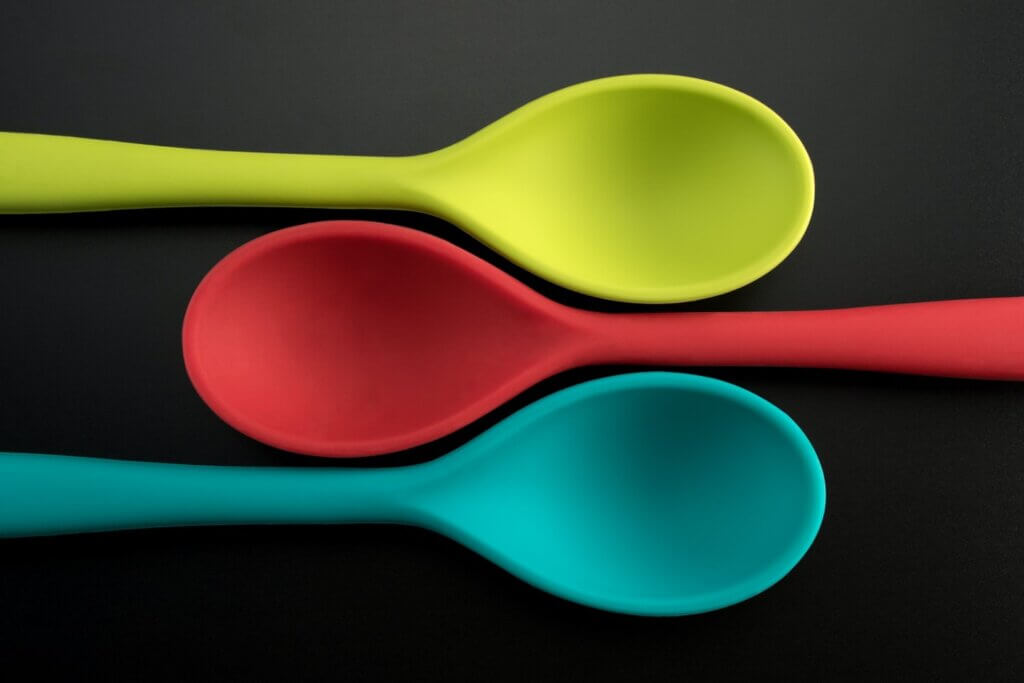
Most importantly, when it comes to cookware, silicone is also food-safe. Meaning that it can be used for all manner of kitchen items, from spatulas to muffin cases.
However, is this wonder material all it’s cracked up to be?
Pros & Cons of silicone cookware
Pros
| It can be used again and again | Here’s the thing that most environmentalists sell silicone on; its long life. Unlike many single-use items, you can wash and reuse silicone cookware as many times as you like. |
| It’s flexible | Its flexibility makes it ideal for baking, especially for complex shapes. |
| It’s light | Unlike many other materials in your kitchen, like glass, metal or ceramics, silicone is nice and light. This makes it great for use with children. |
| It’s mostly non-stick | While all the adverts claim silicone is entirely non-stick if you’ve owned any silicone bakeware yourself, you’ll know this isn’t always the case. Still, it is undoubtedly largely non-stick and can often be used without the need for oils. |
| It won’t scratch your pans | Unlike metal kitchen implements, silicone is nice and gentle on your non-stick pans. |
| It can withstand changes in temperature | Many materials commonly used in kitchens can be damaged if they experience a sudden change in temperatures, such as ceramics or glass. However, silicone can happily move from the oven to the freezer without a crack. |
| It doesn’t stain easily | Because silicone does not absorb liquids, it also does not stain easily. |
Cons
| It can be damaged | Silicone can easily be cut with a sharp object, which can accidentally occur if cutting slices off your cake while it is still in the tray. |
| It’s nearly impossible to recycle | While silicone is recyclable, as with many potentially recyclable objects, it’s the recycling facilities that let it down. Currently, there are very few places that will recycle silicone. |
| It’s hard to clean | Many adverts state that silicone is easy to clean; however, cleaning silicone cookware isn’t always as simple as it sounds, its wobbly nature working against you. |
| It doesn’t support itself | Unlike a piece of metal or glass cookware, silicone won’t stay rigid if you pick it up. Thus, if you remove a silicone pan from the oven, you can end up with whatever it had contained all over the floor, or even worse, all over yourself (but hey, it’s what the 5-second rule is there for). |
Benefits of silicone cookware against other cookware

Silicone cookware has become popular because of its ease of use and simplicity.
Gone are the days of frustratedly banging a cake tin on the kitchen worktop or of realising too late that putting a hot ceramic tray under the tap straight out of the oven leads to disaster.
And as long as you look after it, your silicone cookware can be with you for a long time.
It can be particularly great to use with small children; unlike glass and ceramics, you don’t need to worry about shards after an accidental knock on the floor.
It can also replace many single-use items, in particular, cupcake cases and baking paper. As neither of these items can be reused or recycled, they come with a high environmental cost despite being made of paper.
Silicone pan covers are touted as an environmental win as they can replace a most reviled but incredibly useful single-use plastic; clingfilm.
Most silicone is also easy to store. Squashing your silicone flat is undoubtedly a great deal simpler than playing Jenga with a range of different sized cake tins.
But is silicone cookware safe?
Silicone cookware reviews are mostly positive. However, make sure you get the best silicone cookware possible, as some cheaper silicone items can be of lower quality, using fillers that may be hazardous.
There have been many articles asking whether silicone cookware is toxic.
So are silicone cooking utensils toxic?
Currently, there’s no research to suggest that silicone cookware causes health risks, and overall the material has proven to be very stable.
One of the reasons for concern is the high temperatures that silicone is subjected to in the cooking process. Research on other plastics has shown they can release chemicals into food and water when heated.
However, silicone cookware does not seem to have the same issues and researches say that “pure” silicone can resist heat up to 300º. Of course, new research can always appear, but for now, it seems silicone cooking utensils are safe to use.
Safe cooking with silicone cookware
It’s important to know how to use silicone cookware.
Silicone cookware safety may sound a little over the top, but much of it is simply common sense.
The dangers of silicone cookware primarily stem from a lack of understanding of how this relatively new material should be used.
Silicone cookware instructions should be available when you buy your item. Such as is the silicone cookware microwave safe? What is the silicone cookware temperature range?
As we say, silicone can withstand temperatures above normal cooking temperatures, but it’s always essential to check all these things before you start to use them to cook.
One of the biggest silicone cookware dangers is the flexibility of the material. This can lead to spills when trying to move it.
This can be frustrating at the start of the cooking experience but dangerous when you remove it from the oven.
Another common mistake is thinking it will not heat up and remove your silicone pan from the oven without gloves. Though it will cool down quickly, it can lead to scorching.
And is it environmentally friendly?

The answer is essentially no.
Silicone is recyclable, but barely anyone will recycle it. It isn’t biodegradable, and it will not last forever.
Plus, it can break and it is almost impossible to repair.
Broken silicone can be repurposed, cut up to create art, or plant houseplants in, but most likely, it will end up in a landfill.
Like other plastics, small amounts could be mistaken for food by animals and eaten, though silicone does not degrade easily.
Its one big selling point is that it is highly reusable. This works when compared to polluting single-use items, but if it is replacing another reusable item – that is easier to recycle or compost (such as tin, glass or wooden items) then it isn’t an improvement.
Alternatives to silicone cookware
It’s quite difficult to find safe and eco-friendly alternatives to silicone cookware, if you’re looking for flexibility. Plastic items can also be flexible, but they will have the same downsides as silicone with the added concerns of chemicals leaching concerns and risk that they can melt if left on the heat.
If the environment and durability is your main concern, then many alternatives exist:
Cooking utensils can be items made of sustainable wood or metal.
For pans and pots, you can look for items made from food-grade stainless steel, ceramic, cast iron, or even enamel.
If you really do enjoy baking with silicone, second-hand can be a good way to go to reduce your environmental footprint.
In conclusion
If you’re looking to reduce your plastics footprint, silicone cookware is a bit of a red herring. That’s not to say it doesn’t have its environmental benefits, but it’s simply not the best solution.
Unfortunately, that material that’s durable, flexible, commonly recycled and biodegradable, just isn’t out there yet.
Perhaps silicone 2.0, if it ever comes, will be that one step closer to the practical, safe and environmentally sound cookware we’re all waiting for.