Sustainable consumption behaviour is about thinking, considering, and acting with sustainable consumption in mind.
But that’s a lot to get your head around…
Thankfully, the whole spectrum of sustainable consumption behaviour can be separated into 5 values. Adopt these behaviour values to downshift and simplify.
Why? Simply because they are key to reducing consumption and improving the quality of your life.
How Voluntary Simplifiers Shape Sustainable Consumption Values
Okay, so we should start by explaining what this jargon means.
A “voluntary simplifier” is someone who voluntarily simplifies their life by consuming less and consuming responsibly. That means they choose to simplify because they believe in saving resources and sustainable concepts. They don’t simplify because it saves money, because other factors are forcing them to, or because there are no other options.
It’s voluntary.
These are the people that believe consuming less leads to a richer, more fulfilling life. Simplifying allows you to focus on the meaningful aspects of your life. To be frank, it’s all about cutting out the crap.
These voluntary simplifiers have shaped sustainable consumption behaviour by making simple decisions to change their lives.
Oh. But there are no set rules.
Voluntary simplifiers will simplify in the way that they see fit. They simplify their lifestyles in ways that benefit both themselves and the environment through saving resources and choosing non-materialistic options.
Now, why are voluntary simplifiers particularly relevant in this article?
Simply because eco-conscious researchers and thinkers concluded that voluntary simplifiers follow the most advanced form of sustainable consumption behaviour, as their 5 core values cover all aspects of a “perfect” sustainable lifestyle.
The 5 Values of Sustainable Consumption Behaviour
These are the five sustainable consumer behaviour values that we are striving to meet. Note that this is just one important part of the three-step sustainable consumer behaviour model, but understanding these values is super important as they will define your sustainable consumption choices.
Material simplicity

Consume less and buy wisely.
Material simplicity is all about keeping things simple when you buy and consume. Always pick the simpler route, the simpler option, whenever possible. The key is to simplify. Cut out what’s not needed.
At the core, material simplicity is about being, not having. It’s a non-consumerism value. To achieve material simplicity, you’ll need to reduce luxuries and free yourself from attachment to material goods – thus emphasising what’s really important in your life.
But when you do come to buy something or make a decision as a consumer (it’s unavoidable), you can and should apply the material simplicity concept.
In 1977, Duane Elgin published the Voluntary Simplicity report. In it, he poses some thought-provoking questions that you can use to help you apply the concept practically:
- Does what I own or buy promote activity, self-reliance, and involvement, or does it induce passivity and dependence?
- Are my consumption patterns basically satisfying, or do I buy much that serves no real need?
- How tied are my present job and lifestyle to installment payments, maintenance and repair costs, and the expectations of others?
- Do I consider the impact of my consumption patterns on other people and on the Earth?
Human scale

Operate on a small scale, not corporate sized.
This is about making the immediate environment around you human sized, not corporate sized. So, your home and your work spaces should be smaller and simpler. It ties back to the ‘less is more’ concept from material simplicity.
But it’s not just about the material items you buy to create your home, but the way you live and work. Corporate structures are unbelievably complex. You can work for years and never really be able to measure the impact you have had. In some jobs, you might not even feel like your role has a purpose, or that your responsibilities are meaningless.
So here, apply the concept that small is beautiful.
Reducing your life down to a human scale means you can gain perspective. You know your role, your responsibilities, your part in a team, and the impact you have (not to mention the rewards you’ll get).
In extreme circumstances, this behaviour might even mean a career change.
You’ll find that simplifying your environment in this way will also clarify and simplify your mind. This behaviour really clears out the clutter!
It’s also a fundamental aspect of the Simple Living lifestyle – keep scrolling, there’s more info on this below.
Self determination
Rely on yourself, not businesses.
Obviously, some things just can’t be done at home unless you want to go to incredible extremes like weaving your own cloth for clothes and sawing down trees to make furniture.
But there are many ways where you can cut out businesses and take things into your own hands. This simplifies the supply chain and massively reduces the ecological impact (just think of all the transport costs and emissions you’ll save).
Growing vegetables, eco waste disposal and drainage systems, solar panels for energy, etc.
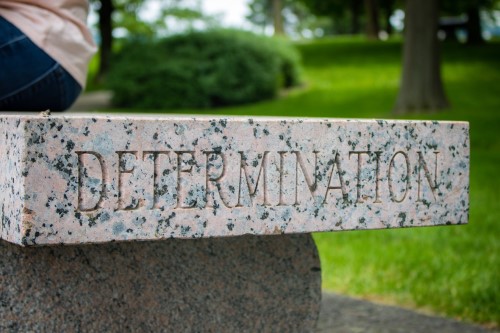
Note that it’s about determination. That should be your hint that it’s not a piece of cake. We find that with this step, in particular, you’ll want to slowly ease yourself into this pro-environmental behaviour instead of jumping in head first.
Ecological awareness
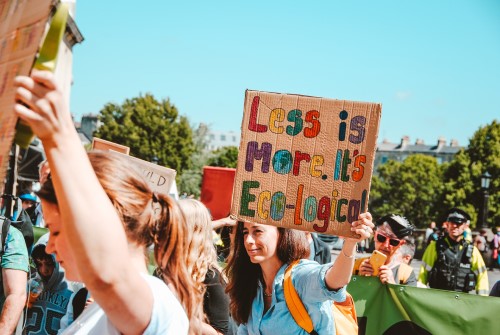
Conserving and reducing waste.
Wherever possible, conserve resources. This is the first step of this behaviour value. Develop an awareness of your current consumption of resources and cut out what isn’t necessary, or can be avoided.
The other half of this sustainable consumption behaviour value is about waste. Every product has a life cycle and it will eventually end up as waste littering the environment. So, how can you reduce waste?
This ties closely to disposing better – the third main dimension of sustainable consumer behaviour.
When you’re thinking about the waste a product will produce, along with conservation and material simplicity (the first behaviour value), you can make incredibly informed decisions when it comes to purchasing.
This behaviour gives you insight and helps you to see the whole picture, not just the short term gains from buying something.
Personal growth
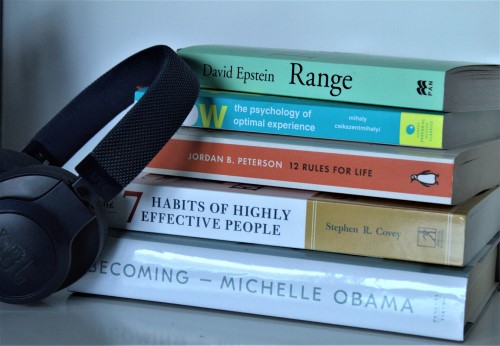
Spend time on you, not commercial “experiences”.
When it comes to downtime, do you choose to put on Netflix or choose something that will push your personal growth?
Commercial experiences are great for relaxing, but do they really enhance your quality of life? Binge watching TV, gaming, spa days – these are all commercially built experiences that aren’t great for your personal development and aren’t good for the environment either.
So what counts as spending time on you? Consider things that allow you to learn, discover yourself, and focus inward rather than outward:
- Gardening, growing things, nurturing and connecting with nature,
- Walking, hiking, sports and fitness – alone or with others,
- Being social, helping and talking to others, spending quality time with friends and family,
- Learning new skills, like languages, crafts, history books.
When you aren’t working and all the house chores are done, spend your free time on an activity that enriches your life instead of just passing the time. We’ve given some popular examples, but the possibilities are vast – choose something that you genuinely enjoy!
4 Cool Lifestyle Concepts Based On These Values
Let’s take a closer look at a handful of the lifestyle concepts that voluntary simplifiers have created.
Zero waste
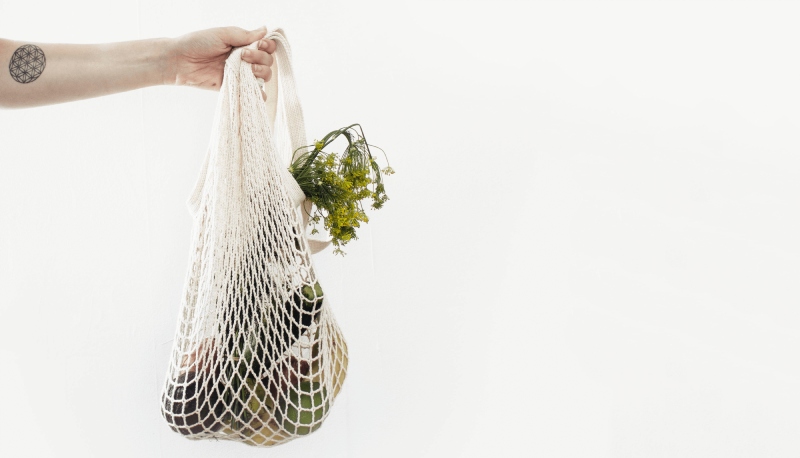
Zero waste is an incredibly noble pursuit. It’s pretty self-explanatory too – it’s about changing your lifestyle to reduce waste as much as possible, with the ultimate goal of “zero” waste.
Waste refers to physical waste as well as other waste forms, like energy and time. And it’s not just about buying less and purchasing things that don’t create waste. It’s about being creative, finding loopholes, reusing and upcycling.
Simple living

If your life was a bowl of soup, simple living is all about simmering and reducing it down to what really matters. It makes the soup of your life richer and more fulfilling, but with less.
Metaphor aside, simple living is a very popular and incredibly rewarding lifestyle to follow. It’s about taking steps to simplify and reduce, to benefit your health, mentality and life (as well as the planet) – both materially and humanly speaking.
If you’ve ever been intrigued by minimalism, then this is the concept for you.
Japandi
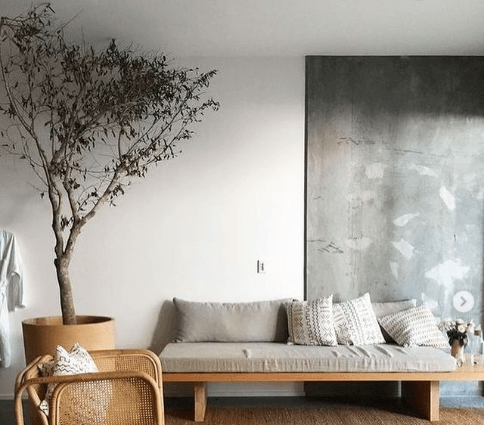
Focus, simplicity and wholesome designs – it’s one of the most eco home decor trends ever. Japandi is the mash up of classic Japanese decor (think exposed natural woods and great storage solutions) with Scandinavian simplicity and warmth.
It’s hygge but with classic, minimalist style. And that’s what makes Japandi a sustainable lifestyle concept. Material simplicity and human scale are two behaviours that Japandi home decor can enable.
Skinimalism

New, natural beauty… but with fewer skincare products? It’s not just possible, it’s a trend, and it’s called skinimalism. Simplifying your skincare routine and embracing your natural skin tone and texture is at the core of this concept.
Although skinimalism is purely focused on just one niche – skincare – it’s a gorgeous example of how reducing waste, simplifying, and working on personal growth can have massive benefits for your lifestyle.
Need More Help Being a Sustainable Consumer?
Changing your behaviour and mindset is a little more challenging than just selecting plastic-free packaging at the supermarket (although that’s important too).
But don’t stress if this all seems too much.
All you need to do is take things step by step, and you can start with our guide to sustainable consumption.