While the media and many manufacturers have been celebrating the success of energy efficient air source heat pumps, there are still a fair share of air source heat pumps disadvantages to be found.
Before you get one installed, make sure you understand exactly what the air source heat pump does, and some of the biggest disadvantages that come along with it.
Our guide below will take you through it all, step by step.
Air Source Heat Pumps Explained
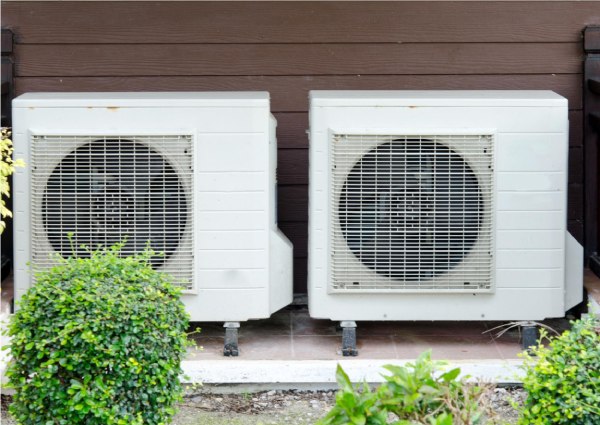
An air source heat pump is a heating device that draws heat from the outdoors
They work by using a fan and heat exchanger. Using electricity, the fans blow outdoor air over the heat exchanger which absorbs and compresses that heat. This heat is then directly transferred to the water that runs through your central heating system.
To operate, the air source heat pump needs an outdoor unit with a fan to draw in air, plus an indoor unit so it can be plumbed into your heating system.
But is the air source heat pump any good? Well, there are significant upfront costs even with the government grant, and with the current cost of gas it is still cheaper to run a gas heater than use the air pump system.
In terms of energy efficiency, however, these heat pumps are incredibly efficient and significantly reduce household carbon emissions.
How Air Source Heat Pumps Save Energy (and Money)
An electric heater uses 1 unit of electricity to produce 1 unit of heat. For example, it uses 3kWh of electricity and emits 3kWh of heat.
The air source heat pump still uses electricity to run, but rather than using that electricity to create warmth, it uses it to draw in air from the environment. So while it may use 3kWh like the electric heater, it has an output of 10kWh instead.
Dividing the heat output by the electrical input gives you a figure called the Coefficient of Performance (CoP). The higher the CoP, the more efficient it is. Don’t worry – you can find this figure on the energy label, along with the seasonal CoP (SCoP) which calculates the average efficiency over both summer and winter.
Most CoPs are between 3 and 5 for a good unit.
The UK’s Energy Saving Trust calculates that this improved efficiency could save an average household £890 to £1,500 per year in energy costs if they upgrade from an existing electrical heating system.
Pros and Cons of Air Source Heat Pumps
There are clear advantages and disadvantages of air source heat pumps, but not all are immediately obvious
Air source heat pumps reviews are littered with complaints about the noise and faulty installation… and these aren’t fake!
But there are advantages too, particularly if you are concerned with the environment.
Let’s take a closer look.
Disadvantages of Air Source Heat Pumps
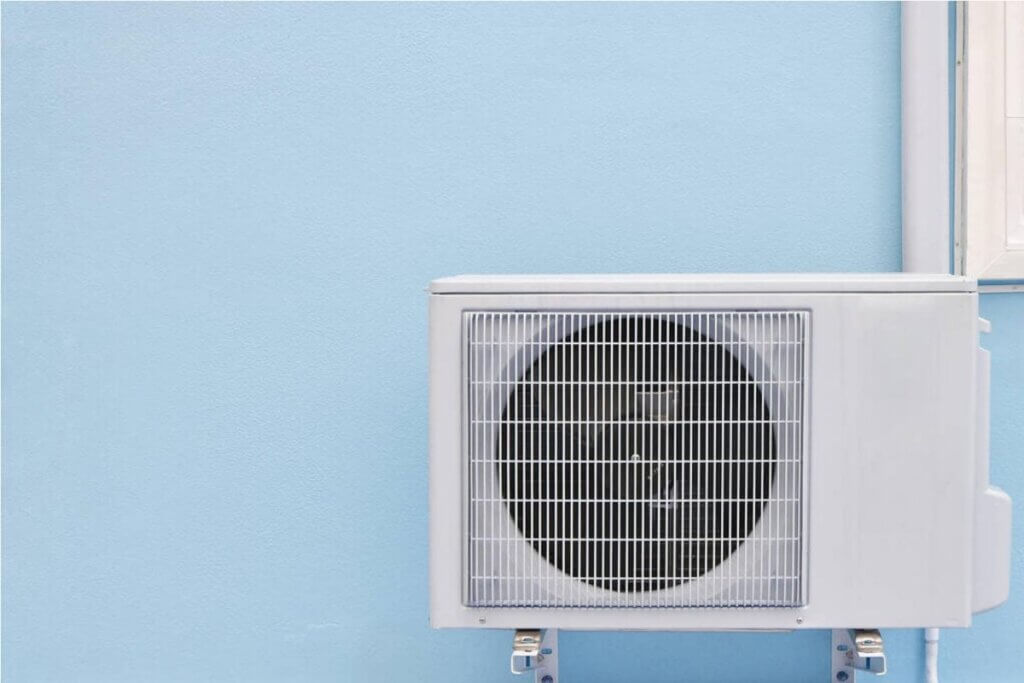
There are distinct air source heat pumps disadvantages in the UK, where our winters are moderately cold and our summers are getting hotter. Our homes also tend to be built close to one another, so your neighbours may need to put up with these disadvantages too!
Costs
The cost of air source heat pumps is currently between £7,000 to £13,000, depending on the model and the professional you hire for installation.
To get the grants for air source heat pumps in the UK, you need to use an installer qualified with the Microgeneration Certification Scheme (MCS). This ensures that you can get up to £5,000 from the government to help pay for the new heating system – see the Boiler Upgrade Scheme.
Air source heat pumps’ UK cost for ongoing heating is going to be higher in the winter and lower in the summer – this applies to almost all homes that switch off the heating in the warm months.
In September, running costs for a 1-bed flat were estimated at around £360 per year. For a large detached house, the estimation was over £1,100 per year. Obviously, energy prices are rising still and these figures will vary depending on other factors, such as your insulation.
The bottom line is: heat pumps are incredibly expensive upfront, and their money saving benefits are only realised in the long-term. Homes that are currently using a gas boiler for heating will notice that the running costs may be more expensive!
Noise
Domestic air source heat pumps can be noisy. With fans operating 24/7, the unit buzzes, vibrates, and hums in your garden. Air source heat pumps noise can disturb wildlife, pets, residents of your home, and not to mention the neighbours too.
This is a huge disadvantage.
When correctly installed, tightly sealed, and equipped with anti-vibration feet, the noise should be minimal yet still unavoidable. Incorrect installation can make the noise even worse!
Before even inviting an installer to check your home, carefully consider if the noise is something you and the neighbours can deal with.
Size and Space
These are bulky devices and take up a decent amount of space. Inside, you could probably fit the internal unit in your existing boiler cabinet… except that might not be feasible.
With a bulky, washing machine-sized unit that needs to hook up on an external wall, you may need to shuffle around your interior design to make it work. That’s another cost to account for!
And while we are on the topic of interior design and installation, you may need to get a water cylinder too, if your current heating system doesn’t utilise one.
And on top of that, not all radiators are compatible!
This size, space and incompatibility problem is huge. That’s why we recommend talking to an installer and even having them check your home – they’ll be able to tell you where it would be installed and whether your current plumbing is even compatible.
Even with the £5,000 government grant, the cost of replumbing a home is high.
Winter Inefficiency
So far, our problems with air source heat pumps can all be minimised with government grants, correct installation, and a bit of luck when it comes to your current plumbing.
But one thing we cannot avoid is the inefficiency of air source heat pumps in the winter. Despite being able to operate with outdoor air temperatures at freezing, the efficiency drops along with the temperature.
That means when you need your heating on the most, it’s going to be at its most expensive too.
Long-Term Problems, Maintenance & Updates
Current estimates suggest that air source heat pumps only need a single service per year (costing you around £150) and will last for 15 to 20 years.
But technology is constantly changing and who’s to say that there won’t be a silent, small air source heat pump model released in the next five years or so?
Like any device, the air source heat pump needs yearly servicing and problems can occur, from clogged fans to busted pipes. Installing a unit and believing that you needn’t spend another penny on it for 15 to 20 years, will leave you sorely disappointed.
Advantages of Air Source Heat Pumps
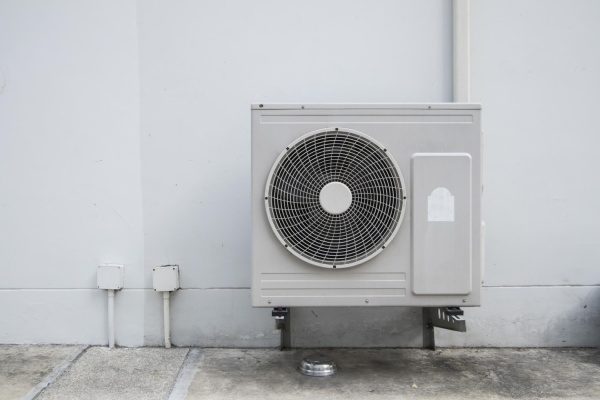
The advantages of an air source heat pump are likely what attracted you to the prospect in the first place. And if you are confident that you can out-manoeuvre many of these disadvantages, then you can enjoy these advantages
- Consistent warmth from your heating system, rather than periods of hot and cold
- Reduced electricity energy use leading to a lower energy bill
- Heating that doesn’t harm the environment (as much)
- A long-lasting heating system that won’t need to be replaced for a few decades
When it comes to finding an air source heat pump, it is easier to find a qualified installer first – they can find the best heater for your home, and get a better price for it. If you are shopping for one yourself, make a note of the EU energy label for the grade and SCoP.
Samsung, for example, has an EHS Mono Air Source Heat Pump with an energy rating of A+++.
Heat Pumps Frequently Asked Questions
After the initial air source heat pumps installation, most installers recommend yearly checks. Occasionally, individual parts might need replacing or cleaning, but there’s no maintenance that house owners need to do.
Air source heat pumps efficiency varies between devices as well as the external air temperature. Judge the efficiency of an air source heat pump by its CoP number. The higher it is, the more efficient the heater is. A CoP of 5, for example, means that for every 1 unit of electricity the heater produces 5 units worth of heat.
You may have read reviews that say air source heat pumps are rubbish… and that’s certainly true for some. Besides being loud and taking up space, the current cost of gas means that switching from a gas central heating system to the heat pump will cost you more in energy bills.
At beeco, we think air source heat pumps are worth it if you use an electric system currently, so the switch will reduce your energy bills, and you have the money to see the system installed correctly and maintained.
Some can, some can’t. A heat pump can cool a home by taking the warm air inside, and transferring it outside instead. This is how it can operate as an air conditioning unit. However, not all units have this capability and it’s unclear if this method of cooling is as energy efficient as heating.
Yes, air source heat pumps can continue to draw warmth from the outside air in winter. Most can operate at 0°C or an even lower temperature below freezing. However, the colder it is, the lower the efficiency. While a pump may have a CoP of 5 in the summer, it could drop to 1 or 2 in the winter.
This info should be clearly outlined by the manufacturer and on the Energy Label.
Not all central heating systems are compatible with air source heat pumps – this is a major drawback. Old large radiators are designed to operate at high temperatures (around 70°C) for a short burst, and then switch off. The heat pump system operates at a lower temperature more consistently to heat your home.
There can also be incompatibility with pipes and plumbing, meaning that air source heat pumps for flats and other shared spaces are even more complex.
At the time of writing, the air source heat pumps price to run is higher than the price of a gas boiler. Electricity is not cheap in the UK, so unfortunately gas remains the more affordable option (for us but not the planet).
The only circumstance where the air source heat pumps price is viable, is if you’re switching to it from an inefficient electric-only heating system.
You don’t need to get planning permission for air source heat pumps unless you live in an area of conservation or in a listed building.
However, you do need to notify the district network operator for the electricity grid in your area. Like charging an electric vehicle, the air source heat pump needs different wiring – you can find the forms you need at the Energy Networks Association.
No, the ground source heat pump doesn’t draw in air through a fan. Instead, it runs pipes underground that are full of water, absorbing thermal heat. This is then compressed and transferred to your home in a similar fashion. Both systems are designed to be more efficient, but the air source version is more common as it doesn’t involve major excavation beneath your property!