Throughout the course of history, civilisations have been built and humans have thrived. How? Industrialisation. Yes, our modern world was built on quick expansion, burning natural resources, and stripping the environment of everything we need.
Sure, nowadays in the UK and other developed nations we are slowly but surely moving towards sustainable and eco-friendly practices. But not every country has that luxury. In fact, many developing countries are still facing the arduous and harmful process of industrialisation for economic growth.
And that is where leapfrogging hops in. Pun intended.
Leapfrogging Definition – What Is Leapfrogging?

Leapfrogging is the term used for a practice of sustainable consumption and production (SCP).
It can be roughly defined as:
Enabling developing countries and emerging economies to leapfrog from undeveloped to developed, encouraging economic growth, while skipping the polluting, inefficient industrialism in-between.
Usually, countries go through a period of industrialisation. Agriculture is developed, cities are built, trade is boosted, and the natural resources of the land are harnessed to encourage economic growth. This, in turn, encourages innovation and technology.
And that’s why we’re interested in leapfrogging at beeco. The concept of leapfrogging the technology gap and avoiding unsustainable industrialisation that draws on natural resources will be highly beneficial for the environment.
Environmental Leapfrogging
Leapfrogging will benefit the people of an undeveloped country and encourage economic growth. But it can benefit the environment too.
A simplified example:
Instead of mining coal and burning fossil fuels to provide electricity for every home, solar panels or other renewable energy sources are installed instead.
Leapfrogging environmental science and technology gives us the opportunity to not just improve an economy, but design an economy in a sustainable, efficient and green way. In a nutshell, that’s what environmental leapfrogging is all about.
We are particularly interested in the Greening Economies in the Eastern Neighbourhood (EaP GREEN) Project. This is one of the most exciting developments in environmental leapfrogging.
The question it poses is; can countries in Eastern Europe, the Caucasus and Central Asia skip some stages of industrialization and bring about a green economy that creates opportunities for all?
Learn more about the EaP GREEN project below.
How Leapfrogging Development is Part of SCP
The UN set out to create Sustainable Development goals for its members and leading nations the world over. One of these sustainable development goals is called sustainable consumption and production (SCP). This SCP goal can be split down into further practices, one of which is leapfrogging.
So that’s how leapfrogging fits into the bigger picture!
The UN defines sustainable consumption and production as:
Doing more and better with less. It is also about decoupling economic growth from environmental degradation, increasing resource efficiency and promoting sustainable lifestyles.
Leapfrogging allows developing countries to build an infrastructure that does more with less. It also applies to the second part of the definition. By decoupling economic growth with the tried-and-tested-and-downright-terrible methods of industrialisation, we can improve the health of our species and the entire planet.
There’s a little bit more to decoupling, but don’t worry, we’ve got an explainer article about eco-economic decoupling.
And if you want to brush up your SCP knowledge, read our 101 Guide to Sustainable Consumption and Production.
The Main Benefits of Leapfrogging

First, let’s take a quick look at some of the benefits for economies and the people living in soon-to-be-developed countries:
- Instant jump to new technologies, including luxuries that we take for granted (electricity, WiFi, public transport, latest healthcare techniques, etc.),
- Education systems and job opportunities both short term (to learn how and build the new eco infrastructure) and long term (once operational, these countries could be key players in the global economy),
- Innovation and the chance to grow. We are investing our latest environmental tech and ideas in these countries, which may go on to take the innovation further.
If you want a more quantifiable idea of how leapfrogging benefits an economy, the EaP GREEN Project is anticipating EUR 20 million to be generated by the private sector alone in partner countries (currently Armenia, Azerbaijan, Belarus, Georgia, Moldova and Ukraine).
This is equivalent to roughly £17 million at the time of writing.
Specific Environmental Leapfrogging Benefits
Improving quality of life for anyone in a developing country is key, but here are some of the practices that can benefit the environment in a massive way too.
🚜 Sustainable Agriculture and Land Management
By “doing more with less” through agriculture, developing countries can use technology to sustainably manage their land. Improving soil health and ending food poverty are two goals of the UN, in particular. By managing the land effectively, we can farm sustainably – which includes the conservation of native species and plant life.
Never underestimate the importance of healthy earth! As a review into the effect of soil on human health explains, “Soil provides many of the nutrients we require and can pass on harmful substances through the food that we eat. Some dust generated from soil can travel thousands of miles and affect people long distances from where they originated.”
If the quality of soil impacts the quality of plant life, then it impacts all species in a region, not just humans. And without a thriving natural ecosystem, our crops suffer too. Sustainable agriculture understands this link and will nurture it for the benefit of the planet and our hungry appetites.
🚯 Waste Legislation and Control
Waste is also tied to soil health. Landfill centres and even just rubbish left to rot at the side of the road has a bigger impact on our ecosystem than you may realise.
But waste management is a key part of economical leapfrogging and decoupling. When we untangle the relationship between economic growth and a linear economy, we start to create a circular economy.
In the case of developing countries, we want to start with a circular economy from the off.
So, instead of new products being created, used, then thrown away, they will go through a cycle. They’ll be reused, fixed, upgraded, modified, and recycled to keep the materials in constant use.
Waste legislation also refers to chemical waste and energy waste, which further pollute our skies, lands and oceans.
With the economical goal of improving efficiency and reducing waste, you also find that the environment is given a little more space to breathe.
🛢️ Less Reliance on Virgin Resources
Another aspect to consider is reliance on virgin resources. This is a key component of industrialisation and often the “worth” of a country is determined by the natural resources it contains.
Binding an economy to a single virgin resource is incredibly dangerous too, as we are now realising. Let’s look at Kuwait as an example.
- 9th largest producer of oil in the world,
- The Kuwaiti Dinar is the highest valued currency in the world,
- Kuwait is also the 5th richest country in the world,
BUT
- 60% of Kuwait’s GDP is made up of oil,
- Kuwait relies on oil for over 95% of its entire export revenue,
- Oil production rates dropped severely between 2016 and 2020,
- And we need to drop our consumption of fossil fuels even further as they’re unsustainable.
The benefit of leapfrogging is that developing nations won’t need to use their natural resources for economic growth. Not only is that better for the environment, which goes undisturbed, but it should create a more stable economy that won’t crash when finite resources run out.
The Biggest Challenges to Leapfrogging
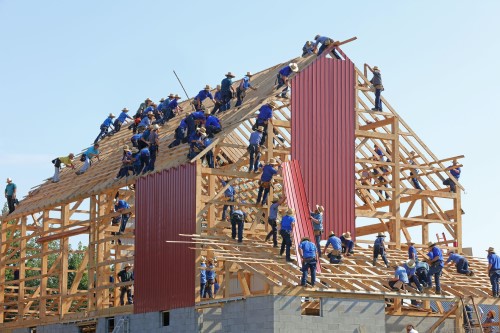
Like most concepts, leapfrogging has some challenges and uncertainties that need to be overcome.
Leapfrogging is not just a new concept, but it also relies on implementing concepts that have never been achieved before.
Even today, the idea of a circular economy is still just a theory. Some people even believe that it’s over-simplified and not actually applicable to the intricacies of the global economy. So, to implement it in developing countries as part of leapfrogging is not without risk!
Changing Mindsets
It’s important for everyone to understand the importance of green economies… and the consequences of inaction. This is one of the biggest issues that the UN wants to tackle.
It’s not just the mindset of consumers and everyday people that needs to change. To make a big difference, policymakers, stakeholders and business owners all need to catch up. Reforming the way our economies work will only happen when everyone is on board.
Why would a developing country not want to leapfrog?
Well, because it’s not a proven way for an economy to be built. It’s also not easy and has more long-term benefits than short-term ones. It also involves taking aid from the UN and developed nations, something not all developing countries are happy to do.
Technology Innovation
Technology doesn’t always work how we want it to. Furthermore, some technology that will be required doesn’t yet exist. Not only do we need to innovate ways to use technology to meet sustainability and leapfrogging goals, but we need to implement and integrate them with a developing country’s infrastructure.
Renewable energy, for example, is an area that needs more innovation to provide enough juice to power all our electrical devices… without taking up land space that we need for crops for our growing populations.
It’s hard to feel confident about leapfrogging when it involves technologies and concepts that we haven’t yet achieved.
Swapping Short Term Gains for Long Term Gains
Industrialisation provides instant results. It builds iPhones by the bucket load and more cars than we have roads for, which undeniably does improve the quality of life for those who can afford them.
Everyone wants to live that life. The glamorous lives of Instagram influencers are popular with followers worldwide, not just in our developed countries. But leapfrogging means saying no to things like this. It means that, in the long term, everyone can benefit from a higher quality of life.
Food poverty, breathing in toxic city air, stable jobs, lack of open spaces… these are the things that environmental leapfrogging will fix.
Unfortunately, it means saying no to unsustainable tech, updating to the newest iPhone every year, and jetting off on luxurious holidays on planes. And that’s not going to sit right with many people. Those in developing countries may be (rightfully) upset that leapfrogging doesn’t allow them the luxuries that industrialisation has allowed us.
Playing God?
The cost of environmental leapfrogging is heightened when you consider that we’ve never done anything like this before and can’t guarantee the results. We know that inaction leads to some terrible consequences, but this unchartered territory too.
Don’t forget that these are not experiments to see how we can fix an economy. These are whole countries with millions of inhabitants. The changes leapfrogging will impose are life-changing. We can’t afford to slip up!
4 Exciting Examples of Real-World Leapfrogging Today
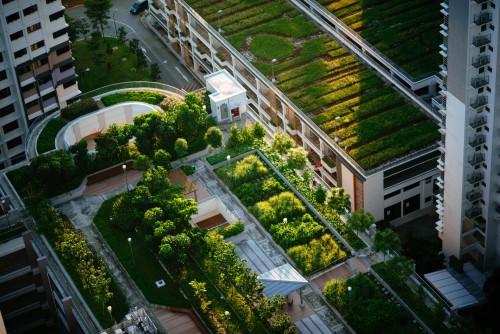
While the idea of a totally green city, with a circular economy and futuristic tech, is a bit out of reach, there are still some leapfrogging projects that have found success to this day.
EaP GREEN Project
This is a project set up by the UNEP (United Nations Environment Programme) to help countries in Eastern Europe, the Caucasus and Central Asia leapfrog towards a green (or greener) economy.
Stage 1 of the project involved introducing SCP concepts in legislation and national policies, promoting green priorities in economic sectors, and ensuring that assessing the environmental impact of a product or service became mainstream.
Currently, the project is working on EU4Environment. This stage focuses on:
strengthening resource and energy efficiency, mainstreaming sustainable public procurement, promoting eco-innovation in small-to-medium enterprises and designing citizen educational programmes for sustainability.
Renewable Energy
The Climate Reality Project has reported on several countries leapfrogging towards renewable energy, bypassing fossil fuel use altogether.
- Morocco – has the largest concentrated solar farm in the world, and by mainstreaming renewable energy they’ve lowered the price significantly. This makes renewable energy more accessible to all.
- Nicaragua – the country went for a rickety electric system run on oil, to 50% of their energy system run on renewables… with a goal of 80% in sight.
- Kenya – the first African country to use geothermal power will generate 50% of the countries energy with this method by 2040.
M-PESA in Kenya
In Kenya, having a bank account is rare… but transacting with money with technology is incredibly common. How? Through technological leapfrogging.
M-PESA (M stands for mobile and PESA is Swahili for money) enables anyone with a mobile phone to transact money. Even before the infrastructure for widespread bank accounts and credit/debit card transactions was created, Kenyans were using their mobile phones to get ahead of the game.
Unilever’s Tea Sustainability Efforts
Unilever is one of the world’s biggest multinational companies. Among their brands is Lipton and other tea brands. Their tea is mostly sourced from India and China, particularly from the poorer regions of these countries.
This is an area where the effects of poor soil health and unsustainable agriculture could devastate entire communities as well as unbalance the ecosystem.
In 2009, Unilever launched a new corporate vision to double the size of the business while reducing overall environmental impact across the entire value chain.
Their goal was to mainstream sustainability in tea production and they’ve achieved that within their own tea brands. They went from unsustainable, unchecked and unregulated tea growing to entirely sustainable agriculture with Rainforest Alliance Certification. From their case study Unilever Sustainable Tea: Leapfrogging to Mainstream, it’s clear that this was great for the environment and profitable too.
Policymakers Need to Take the Lead
At beeco we’re all about two things: the environment, and how you can help it through making sustainable consumption choices. When it comes to leapfrogging, this is one area of sustainable consumption and production where the average person can’t do much.
So, we need to rely on policymakers, politicians, and organisations to make these large-scale changes.
In the meantime, if you want to learn about what you can do on a personal scale to push SCP forward, read our guide on how to reach sustainable consumer behaviour.