Consumption and production are what power our economies, but they’re also contributing to the climate crisis. So, ensuring sustainable consumption and production is so key to a bright future for the world. But do you know for certain what that entails?
This is the article that will set it straight.
We’ll cover mindful consumption, the difference between consumption and production, and an overview of the leading resource on sustainable consumption and production: the SDG Goal 12.
Sustainable Consumption and Production Definition
At beeco, we define sustainable consumption and production (SCP) as:
Making systemic changes to do more and better with fewer resources. It’s about the relationship between consumption and production on a global scale. Sustainable consumption and production minimises our reliance on natural resources and shifts the way both governments/corporations and consumers think and prioritise. The aim of SCP is to change the way we live to benefit the planet and future generations simultaneously.
Sustainable development is about organisation. Reorganising an economy, plastic waste regulations, sustainable agriculture, etc.
Sustainable consumption is about the use of resources. Zero-waste principles, renewable energy consumption, buying local, etc.
Much of sustainable consumption can only be achieved once sustainable production has allowed eco-friendly procedures and products to become available. Production and consumption are linked – there’s no arguing that – but there’s a reason why our SCP definition is distinctly different to our sustainable consumption (SC) definition.
We Like Our Sustainable Production On The Side
SC makes up part of SCP, of course. But having one huge definition and goal is very hard to execute and isn’t overly useful to me and you.
SCP is about the economy, global attitude, and even capitalism to an extent. Policy changes and large-scale restructuring will be required to do this… which is all well and good, but what can you do about it?
While SCP is for the governing bodies and organisations to figure out, SC is much more achievable on a personal level. So while we should definitely be pressuring our governments to implement SCP, we can also work on SC at home.
Still with me?
Read our full definition of SC, including the difference between weak and strong sustainable consumption, in Sustainable Consumption – beeco’s Definitive Guide.
The Challenges SCP Faces
To ensure sustainable consumption and production patterns, there are some hurdles we need to leap over.
A Growing Population and Developing Countries
The population is growing. As the UN points out, if our global population reaches 9.6 billion in 2050, we will need 3 planets worth of natural, virgin resources to sustain how we live right now. This puts a much more imminent timeline on SCP.
Furthermore, developing countries are trying to grow and improve the quality of life for their inhabitants. The problem is, industrialisation, capitalism, and a linear economy are the proven ways of achieving this. It will be a challenge to help developing nations grow in a sustainable fashion.
Dependency on Natural Resources
We currently depend on using natural, virgin and unsustainable resources to create products and power our worlds. This needs to change. There are some technological boundaries here that we’ll need to overcome, such as recycling issues and capacities.
There are also some practical reasons why virgin, unrecycled materials have been essential. For example, the brand-new PPC protective gear for our frontline health workers is required for hygiene.
A System Designed to Create Waste
One of the biggest problems with our current system (learn more about linear economy below) is that it’s designed to create waste. This massive problem can be split down into smaller areas.
Wasteful Consumption
Items are made to be wasted and as consumers, we are making this problem worse. We buy things we don’t need or want, or we waste the things we do want because we can “just buy another one”.
A simplified example would be wrapping paper at Christmas – it’s ripped off once, thrown away, and often the novelty gift inside will be thrown out too.
These consumption trends that create waste without a second thought are a huge barrier to the SC part of SCP.
Waste Generation
We create piles and piles of waste. This creates numerous problems, the first and most obvious being the damage to the environment. It’s not sustainable for our land or oceans (see bluewashing) and we don’t have the capacity to recycle it all.
This is where the 5Rs, particularly reusing, are important. A sustainable development practice can also help – let’s only create products that can be fixed, reused, or recycled!
Energy Consumption
We use energy to power our world, but if we keep going at this rate renewable energy sources won’t be able to keep up. This is a big hurdle for SCP, which requires new technology to overcome many hurdles… which need to be powered by electricity.
On a personal SC level, reducing your energy consumption and becoming self-reliant (get those solar panels installed!) is a good way to make a start…
Resource Efficiency
There are some natural resources that are sustainable and very useful. Bamboo is a great example, as it’s incredibly fast growing and is great for making clothes. But we need to use these natural resources efficiently.
Controlling and regulating the use of natural resources like this will be essential. This also ties to sustainable agriculture.
Economic Growth
The last big problem we want to highlight is economic growth. Our current system is designed so that the more products you sell, the more successful you are. This creates waste and encourages cheap, fast production.
SCP is all about dealing with the economy and the structure it creates. Thankfully, we have a plan for this – see circular economy below.
Sustainable Practices That Follow SCP
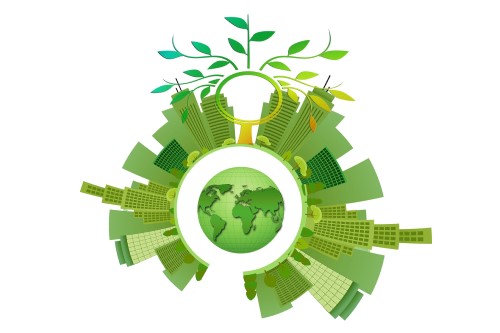
Sustainable practices can be as small and simple as growing your own vegetables at home, but to make a big difference, we need organisations to adopt SCP practices.
Here are six of the most important practices we are currently advocating (but check out the UN SCP goals at the end of this article for more).
Life Cycle Thinking
You might have heard of the 5 R’s – refuse, reduce, reuse, recycle, and rot. These are aimed at consumers and can help you reach zero waste. You start by refusing unnecessary products and packaging, reducing your consumption, then putting any waste through the reuse, recycle, and rot stages wherever possible.
This is good for consumers like us and it’s definitely an aspect of SC, but we need a slightly different process for SCP that considers the entire lifecycle of resources, products, and services.
One example of how we can impact and change unsustainable production is by introducing the prevention step. This is about introducing policies and change on a global scale to prevent unsustainable products from being developed in the first place. We shouldn’t be relying on consumers to say “no” to unsustainable things and “yes” to sustainable things. Sustainable options should be the norm in the first place, rather than a luxury that only some can afford.
Life cycle thinking also applies to marketing, distribution, waste disposal… etc. It’s like the 5 R’s but on a global organisation scale. The end goal is resource efficiency and the sustainable management of resources along the entire lifecycle.
This means we need to work on things like eradicating planned obsolescence, taxation on unsustainable/virgin resources, and improving the efficiency of supply chains.
Learn more by reading our guide to Life Cycle Thinking.
Circular Economy
Circular economy is easily one of the biggest and most impactful of all the sustainable consumption and production policies.
The economy is about the relationship between production, trade, and consumption. Circularity is about making this relationship a closed loop. So, instead of economic growth being tied to the consumption of virgin resources (that eventually end up in landfill), prosperity is tied to reusing resources and efficient processes.
By tying our economy to sustainable policies, we can combat climate change, reduce our material footprint, and have a great positive environmental impact!
Read more about Circular Economy.
Eco-economic decoupling
This is about separating environmental degradation with economic growth, which ties closely to a circular economy. It’s fair to say that currently the more we degrade the environment by sucking out virgin resources and taking everything mother Earth can give us, the more we succeed as a species.
More resource use = more economic success and growth.
You can see that this is a problem for the environment! The goal of decoupling is to unlink these two processes, so that we can increase production and quality of life while reducing resource use and our impact on the planet.
Learn more about this concept in our complete guide to eco-economic decoupling.
Eco-Efficiency
Eco-efficiency is closely tied to decoupling. In fact, it’s a way to measure how successful decoupling has been. Eco-efficiency is about creating more goods with fewer resources and pollution.
A product that has high eco-efficiency was created with minimal resources, produced very little pollution, and can be reused, fixed, recycled, etc. once broken.
Perhaps one day all products will come with an eco-efficiency rating, so you can easily compare them. But in the meantime, read our article explaining eco-efficiency and how well this SCP practice could work.
Environmental Leapfrogging
We love this phrase! Environmental leapfrogging is all about how we can help developing countries.
Most countries go through a development process to reach modernisation and become a “first-world country”. Roads are built, cities boom, agriculture is expanded… and the environment suffers. Only once that has been completed do governments and people look at sustainability as a goal.
So the idea is to help developing countries “leapfrog” from undeveloped to sustainable, without that part in the middle where the environment suffers.
To find out how we plan to help developing countries leapfrog to sustainability, read our article on environmental leapfrogging.
The UN Goals for Sustainable Development
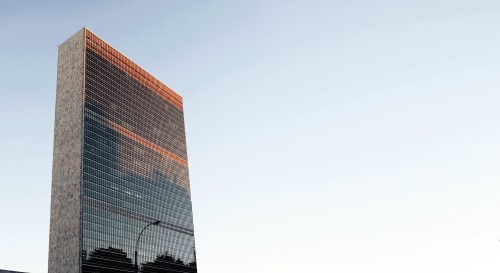
The UN Sustainable Development goals were set out to ensure sustainable development as the world progresses.
It’s about developing in a way that’s sustainable. There are 17 goals set by the UN and number 12 is dedicated entirely to sustainable and responsible consumption and production.
First, the UN recognises that consumption and production drive the global economy. They also understand that under the current system (a linear economy), we are relying on natural resources to power everything.
They define SCP as:
“Sustainable consumption and production is about doing more and better with less. It is also about decoupling economic growth from environmental degradation, increasing resource efficiency and promoting sustainable lifestyles.”
What we really like about the UN sustainable development goals is that they’re split down into smaller steps to achieve. For goal #12, there are 11 points to their plan which make it more actionable (albeit on a governmental scale, not a personal one).
Starting with the overall goals:
- 12.1 – implement a 10-year framework of SCP for all countries, with developed countries leading the charge,
- 12.6 – encourage large/transnational companies to adopt sustainable practices and integrate sustainable info,
- 12.7 – promote sustainable public procurement practices (finding and buying goods, services, etc.),
- 12.A – support developing countries by strengthening their tech and science capabilities that will help them move towards sustainability,
- 12.B – develop tools to monitor and control sustainable development, particularly for sustainable tourism,
- 12.C – remove market distortions, restructure taxation, and phase out harmful subsidiaries to minimise their adverse impact on the environment – all without damaging the poor and struggling communities.
There are also a number of goals with time schedules:
- 12.4 – by 2020, manage chemical production and all waste produced throughout their lifecycles, to benefit human health and the environment,
- 12.2 – by 2030, sustainably manage and efficiently use natural resources,
- 12.3 – by 2030, halve global food waste at a consumer level and reduce food loss on production and supply chains,
- 12.5 – by 2030, reduce waste generation through prevention, reduction, and the 5 Rs (see our Guide to Zero Waste to learn about them),
- 12.8 – by 2030, ensure people around the world have the info to live sustainably and in harmony with nature.
The 10-Year Framework of Programmes
Besides the UN 17 Goals, there’s also the 10-year Framework of Programmes (10YFP) which is designed to take “action to enhance international cooperation and accelerate the shift
towards sustainable consumption and production (SCP) patterns in both developed and developing countries.”
This is the systemic change we’ve all been hoping for!
You can read the long report with all the points that the programmes will solve, but to recap some points that we’re most excited about:
- The Consumer Information Programme which will “facilitate easy, practical and sustainable choice by consumers through the provision of accessible, reliable and verifiable life cycle based sustainability information by market suppliers.”
- Sustainable Tourism which will become much more relevant as the world gets back on its feet after the pandemic.
- The Sustainable Food System which will address food poverty and nutritional deficiency while aiming to “improve resource use efficiency and reduce the pollution intensity of food systems.”
Summary
The UN is creating the path ahead for SCP and we couldn’t be more excited about it. In fact, we are doing our best to help the world reach these goals.
Check out all our articles about sustainability to educate yourself and achieve 12.8 – a world where everyone knows and understands how sustainable consumption and production is the key to a better future for all!